The Five Best Problem Solving Strategies
personal Contents
- Introduction
- The Five Whys Method
- The Minto Pyramid Principle
- Ishikawa Diagram
- Inversion
- Issue Trees
- A Bonus Round
Introduction
Fundamental to life or any other practise. Here are some problem solving strategies from Alex Brogan.
The Five Whys Method
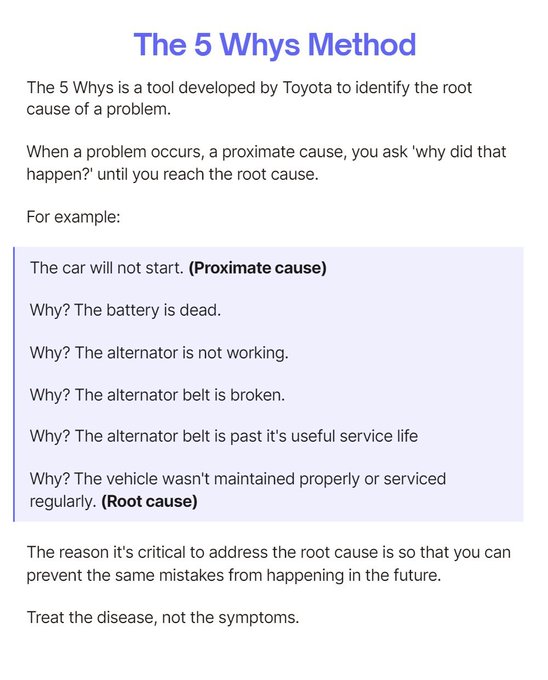
It’s very simple to react to a stated problem without addressing the root cause.
What you hear or see when something is initially presented to you is usually the surface-level pain point or struggle.
By asking the right questions, you can get to the root and find a solution.
Here are the five questions:
- Why?
- Why?
- Why?
- Why?
- Why?
See this in action with: Richard Feynman, Magnets
The Minto Pyramid Principle
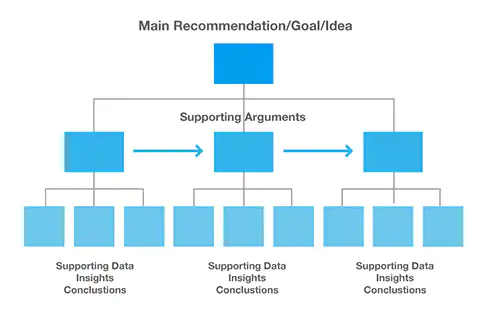
A McKinsey developed framework for writing and presenting ideas.
“A tool to help you find out what you think.”
Process:
-
Start with the problem first
-
Group and summarize your supporting arguments
-
Logically order your supporting ideas
Ishikawa Diagram
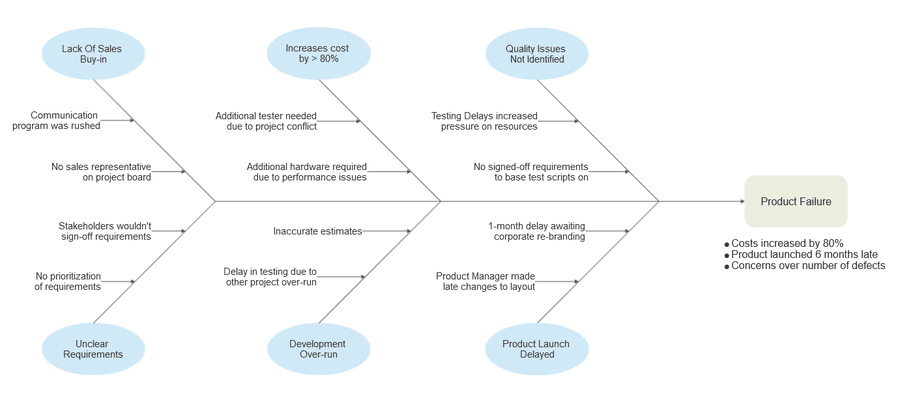
A diagram indicating the possible root causes of a problem.
Steps:
-
Define the problem (Product failure)
-
Identify contributing factors (Blue ovals)
-
Find possible root causes related to each factor (Black text and arrows)
-
Analyse the diagram
Inversion
Inversion
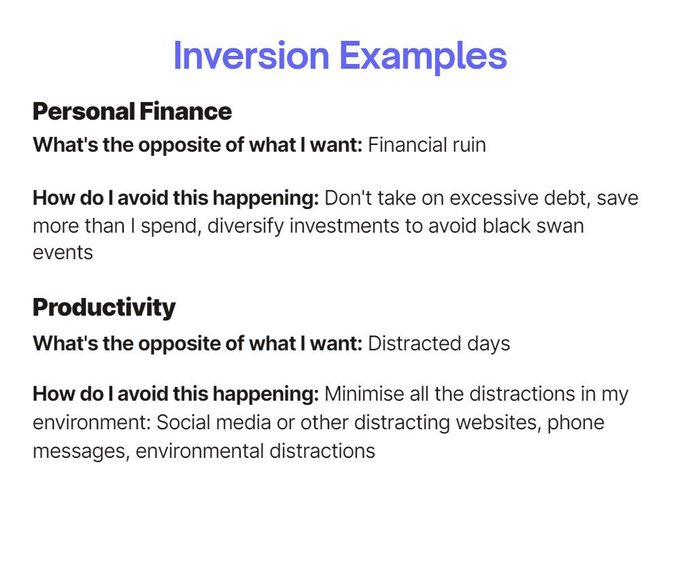
When problem solving, consider the opposite of what you want—the worst-case scenario or solution.
Now ask, “How do I avoid this happening?”
Inversion teaches you what to avoid on the path to success.
Avoiding stupidity is easier than seeking excellence.
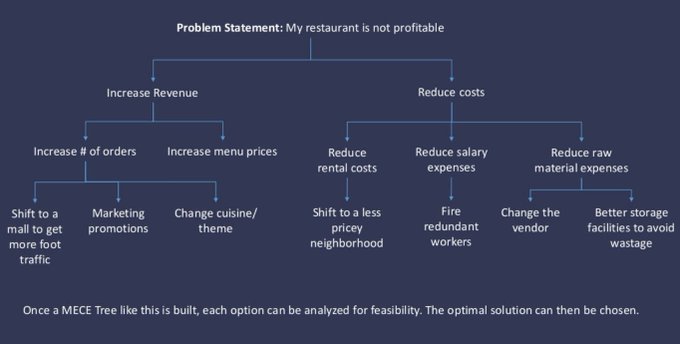
Issue Trees
Issue trees are a visual diagram that help you break down a larger problem or question into several smaller, more solvable questions.
They allow you to identify the root causes of a problem as well as to identify its potential solutions.
A Bonus Round
Questions to help you face reality:
- What’s happening now?
- What do you need to know?
- What’s working well and what isn’t?
- What kept you from trying other things?
- Where are you now in relation to your goal?
- What is preventing you from obtaining your goals?
Questions to help you discover what you will do:
- What do you need to put into place first?
- What actions will you take over the next week?
- What will be the next step you take in the next 24 hours?
- How/ when/ who/ where/ what will you do to move forward?
Thanks. This was written by Nick Otter.